
Are your stuck fixing messy files instead of doing billable advisory? Is baseload bookkeeping—or even White label bookkeeping – chewing up your team every month? Are bottlenecks and data churn making growth feel heavier than it should? That pattern shows up in a lot of firms. You win the client, the pipeline looks healthy, then the back end starts dragging. Month-end slips. Queries pile up. Review notes bounce around. Local hiring gets expensive fast, and suddenly the work that should support growth starts blocking it.
This is where white label bookkeeping can actually earn its keep. It is not a cheap pair of hands or a patch job. Used properly, it gives you clean capacity, steadier turnaround, and a way to protect margin without burning out your local team.
At BlueCrest, we work with Australian accountants, bookkeepers, and SMSF professionals who need more than raw processing hours. Successful practices need structure and fewer handoffs. Delivering work this way reduces rework and keeps partner time focused on the jobs that clients will actually pay a premium for. This guide is about making that model work in the real world.
Standardizing Workflows for Consistent Delivery
High-growth firms need repeatable delivery. If every client file is set up differently, every bookkeeper uses a different naming style, and every manager has their own review habits, your offshore team will spend half the job decoding preferences. That kills efficiency before the work even starts.
The fix is simple, but most firms leave it too loose. Build a working playbook and make it practical. Not a glossy internal document nobody opens. A live operational guide your team actually uses.
When firms engage white label bookkeeping services for firms, we usually tell them to lock down a few basics first:
- standard chart of accounts by client type
- fixed month-end close dates
- file and folder naming rules
- query escalation rules
- who reviews what, and when
That sounds basic because it is. But basic done properly removes a lot of drag.
Retail clients should not come in with one coding structure and leave with three different versions over six months because different staff touched the file. Trade clients should not have payroll journals handled one way in March and another way in June. Every inconsistency creates review friction, and review friction eats margin.
A well-defined playbook also cuts training time. Your white label team gets into rhythm faster. Your local reviewers know what to expect. New staff are easier to onboard. The result is not just cleaner books. It is steadier throughput.
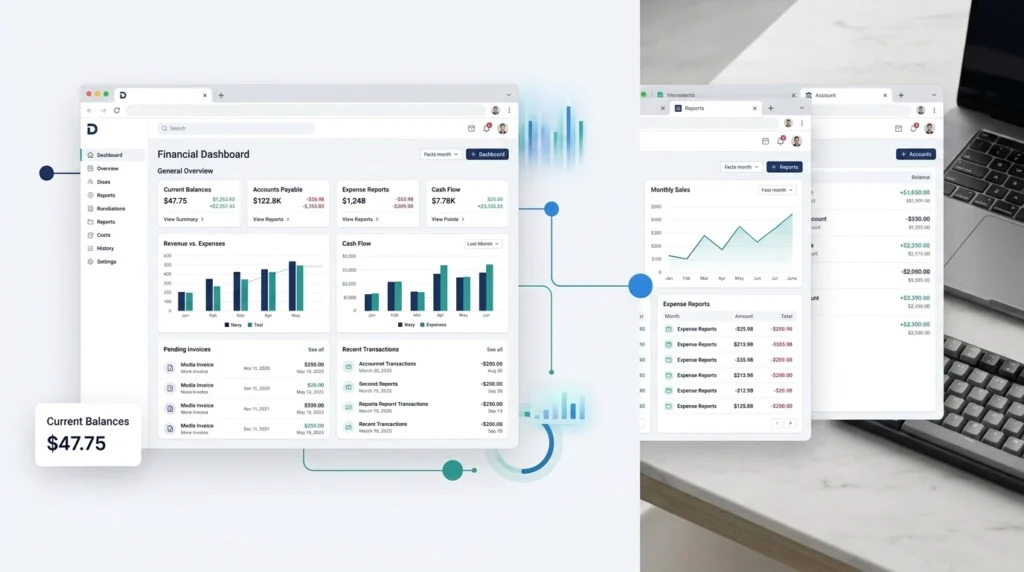
Get More Out of Xero in White Label Bookkeeping
Too many firms still run Xero like desktop software in the cloud. They log in, code transactions line by line, chase documents late, then wonder why the baseload never shrinks.
Xero works best when the setup is tight. The bank feed needs to be live. Bank rules need to be tested, not dumped in and forgotten. Supplier capture needs to happen close to the transaction date. If that foundation is weak, your team ends up doing manual cleanup month after month.
A strong White label Xero workflow should deal with the boring stuff early so your local team is not dragged into low-value processing. That usually means:
- direct bank feeds switched on across the client base
- bank rules tuned to recurring transactions
- receipt capture tools like Dext or Hubdoc set up properly
- supplier and payroll feeds checked at source
- clearing accounts reviewed before month-end, not after
Here is the point a lot of firms miss: automation does not remove the need for bookkeeping discipline. It rewards it. If the setup is sloppy, automation just creates faster mistakes.
We see this a lot with fast-growing firms. They onboard new clients quickly, but the ledger setup is inconsistent. GST treatment is not reviewed closely enough. Old chart structures are left sitting there. Duplicate rules creep in. Then the file starts producing noise, and your senior accountants spend expensive hours sorting out avoidable mess.
If you hand that setup work to a white label accounting firm, make sure they are not just processing transactions. They should be cleaning the engine room. The value is in reducing manual touchpoints, not relocating them.
When the Xero stack is set up well, the data lands cleaner, reconciliation moves faster, and your team can step into review or advisory with far less backtracking.
Tight Communication in White Label Bookkeeping Teams
Most outsourcing problems are not caused by technical skill. They come from messy communication. Fragmented channels often lead to half-answers. Consequently, jobs sit idle because nobody knows who owns the next step.
If you want a white label model to work, treat communication as an operational system, not an afterthought.
Email chains are usually where work goes to die. Use a proper workflow tool, a shared job tracker, or a controlled Slack setup with clear ownership – especially when managing White label bookkeeping. Keep client-specific queries tied to the actual job. If your team has to hunt for context, turnaround will slip.
The firms that run this well usually have a few hard rules:
- queries get acknowledged within a defined timeframe
- open items sit in one visible place
- recurring weekly capacity reviews happen, even if they only take 15 minutes
- reviewers do not drip-feed comments across five separate messages
- document collection runs through one secure path, not three
Good white label arrangements feel boring in the best way. People know where to look. They know who is accountable. They know what happens when information is missing.
That lowers noise across the whole practice.
It also helps with client experience. Your client does not care whether the delay came from a missing PDF, an unclear note, or an internal handoff problem. They just feel the delay. Clean internal communication protects your brand.

Security and Compliance in White Label Bookkeeping
Outsourcing only works if trust holds up under scrutiny. That means your delivery model has to be secure, documented, and aligned with Australian compliance expectations.
This is not just about ticking a box on MFA. It is about how access is granted, how data is handled, where files sit, and whether your firm can explain the setup clearly if a regulator, client, or insurer asks.
When assessing white label bookkeeping for accounting firms, look at the operational details:
- MFA on every relevant platform
- role-based access rather than shared logins
- cloud-based workflows instead of local data downloads
- documented user controls and access removal procedures
- clear disclosure in engagement terms where offshore resources are used
The ATO guidance on outsourcing and offshoring under the code of professional conduct is worth reading closely because it frames what proper oversight should look like in practice, not just on paper. See the ATO’s code of professional conduct.
There is also a commercial point here. Secure processes are efficient processes when done properly. Single sign-on, controlled permissions, and standard access workflows reduce time lost in password resets, approval delays, and risky side-channel document sharing.
If your current setup relies on staff downloading client files locally, forwarding records around, or storing sensitive working papers in scattered places, that is not just a risk issue. It is an efficiency issue too.
Move Local Capacity into Advisory Work
This is the real upside.
If your senior team is still buried in transaction review, coding cleanup, and catch-up jobs, you are wasting good capacity. Those people should be spending more time on interpretation, planning, and client conversations that lead to stronger retention and higher fees.
That is why firms use white label accounting services. Not to avoid work. To shift the work mix.
Once the baseload is stable, your practice can move into stronger-value activities like:
- margin and cash flow reviews
- tax planning discussions before year-end pressure hits
- better forecasting conversations with business clients
- earlier identification of bookkeeping issues that affect compliance outcomes
- more consistent client contact that supports retention and referrals
This is where billable advisory starts to become realistic instead of aspirational.
A lot of founders say they want an advisory-led firm, but their operating model says otherwise. Instead of advisory, best staff stay tied up in low-leverage work. Monthly cycles often become too reactive. Furthermore, messy data prevents confident use. Partners then only see the client once the numbers are already late.
Fix the data flow and the delivery cadence first. Then advisory has a chance.
What Efficient Firms Do with White Label Bookkeeping
The firms that scale cleanly are usually not doing anything dramatic. They just remove friction early and keep doing the simple things well.
Efficient firms standardize file structures, reduce data churn, tighten Xero setups, and stop letting queries drift. They also secure access properly and protect partner time for higher-value work.
That is the practical case for white label bookkeeping. Better control over turnaround. Better use of local capability. Fewer bottlenecks in the monthly cycle. That’s how you actually get your head above water and find some profit. If your team is flat out just keeping up with the baseload, something has to change. Moving to a white label accounting solutions model isn’t about losing grip. It’s about getting the capacity you need to actually grow the thing without the usual quality drop.
Legal Disclaimer: BlueCrest Accounting Solutions provides accounting outsourcing services to accountants and is not a financial advisor or planner. This article is for informational purposes only and should not be solely relied upon for business, financial, or operational decisions. BlueCrest is not responsible for any loss arising from reliance on this content. You should seek independent professional advice relevant to your firm’s circumstances.