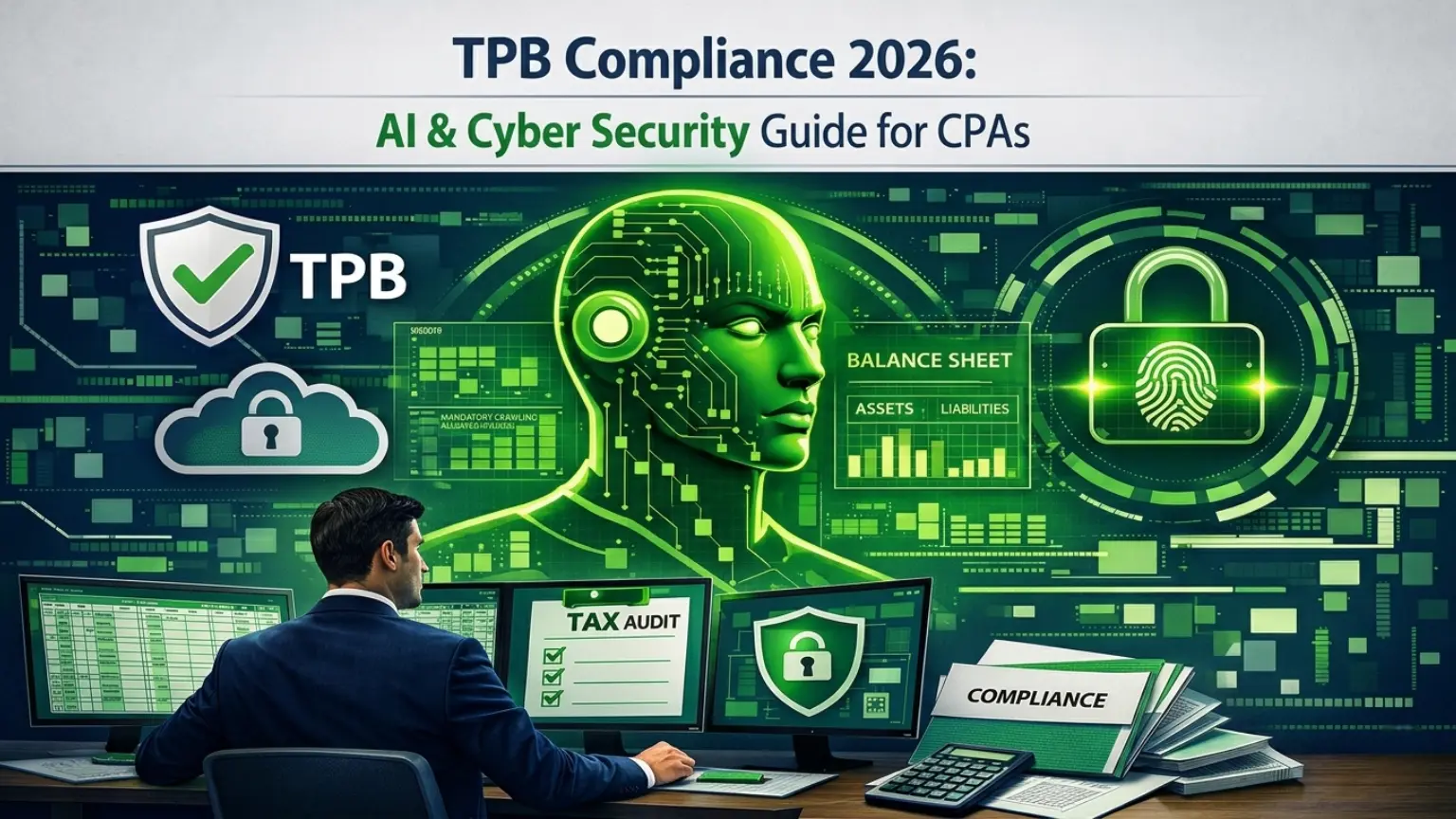
As Australian accounting firms approach EOFY, the Tax Practitioners Board has drawn a firm line on technology. Navigating TPB compliance 2026 means AI and cybersecurity are no longer just IT issues—they are strict Code of Conduct requirements. Here is exactly what CPAs must do to protect their practice, secure client data, and stay penalty-free this tax season.
2-Minute Summary: What Every CPA Needs to Know for 2026
- Human-First AI: The TPB’s new guidelines (TPB(I) D62/2026) make it clear: AI is a tool, not a practitioner. You are 100% responsible for every bit of data an AI processes.
- Cyber is Mandatory: Basic security is no longer “best practice”, it is a Code of Conduct requirement. If you lack controls such as MFA or the ACSC Essential Eight, you risk breaching your professional competence obligations.
- Consent is King: You cannot feed client data into public AI tools (like ChatGPT) without explicit, informed consent. Doing so is a direct breach of client confidentiality.
- Outsourcing Oversight: Using a secure accounting outsourcing partner in Australia requires more than a handshake. You must vet their data security and ensure they comply with the Australian Privacy Principles.
- PI Insurance Risks: AI data leaks are becoming a major trigger for professional indemnity claims. Without documented AI policies, you might find yourself uninsured in the event of a breach.
The 2026 Reality Check: Is Your Practice Ready?
Could one AI mistake put your registration at risk? Is your cyber setup strong enough for a TPB re- view? Is your team using ChatGPT without telling you?
Welcome to TPB Compliance 2026. AI and cybersecurity are no longer just IT issues. The TPB now treats them as conduct and ethics issues. The rules are tighter, the ATO is checking more data, and the room for error is small.
This guide gives you a practical roadmap to protect your firm, your clients, and your team.
The TPB’s AI Line in the Sand
The TPB’s tpb artificial intelligence guidelines in Exposure Draft TPB(I) D62/2026 are blunt: AI is not a registered practitioner.
If AI drafts a tax position and it is wrong, the TPB looks at you, not the software. Under the updated
TPB code of professional conduct updates, AI does not reduce or share your responsibility. Treat every AI output as a rough draft. Review it. Fix it. Sign off on it before it goes near a client.
ChatGPT and the Confidentiality Trap
One big part of the cpa data security mandates 2026 is where client data goes. Public AI tools like free ChatGPT can retain or use what you enter.
Paste a client’s profit and loss into one of those tools, and you may have disclosed confidential data to a third party. Under the new rules, you can breach Code Item 6 unless you have specific written client consent.
That means engagement letters need an update. Spell out which tools you use, where data is stored, and what protections apply.
Cyber Security: No More “Opt-In”
The TPB now links cybersecurity rules for accountants in Australia directly to professional competence.
If your firm gets hit because MFA was missing, the TPB can argue you failed to provide services competently. The Board is clearly leaning on the ACSC Essential Eight, including:
- Regular patching of applications and operating systems.
- Restricting administrative privileges.
- Daily backups stored offline or in a separate secure cloud.
- Strict MFA on remote access and sensitive apps.
A password alone is not enough in 2026.
The Outsourcing Question: Securing Your Partners
With the ongoing accountant shortage, more firms are using offshore teams. But you cannot outsource liability.
When you assess outsourced accounting services, check that their white-label bookkeeping data security meets strict Australian standards to ensure full TPB compliance in 2026. Look beyond the contract. Verify their IT environment, their approach to the accounting privacy act compliance 2026, and their breach response process.
At BlueCrest, we work as an extension of your firm. Our ethical white-label bookkeeping approach is built around secure workflows and TPB-aligned handling of client data.
Professional Indemnity & ATO Data Matching
Professional indemnity insurance for accountants is getting tighter. In 2026, many insurers want to see a documented AI policy before renewal. If your controls are weak or undocumented, covering can get harder to keep.
At the same time, ATO data matching EOFY 2026 is getting sharper. The ATO is cross-checking more data, faster. If AI-assisted work creates mismatches, your firm wears the review.
Whether it is general compliance or complex SMSF admin outsourcing, the fix is the same: keep a human in the loop. Every automated process needs a qualified final review.
The 2026 Survival Checklist
Want to keep the TPB happy? Start by finding out which AI tools your team is actually using, including the built-in ones hiding inside your software.
- Do a Proper “Tech Roll Call”: List every AI tool your team uses, from ChatGPT to hidden auto- features inside your accounting stack.
- Update Engagement Letters: Include AI usage and data storage details.
- Implement MFA Everywhere: No exceptions.
- Draft an AI Policy: Set clear rules on what data can go into AI tools.
- Vet Your Outsourcing Partners: Confirm their cyber controls align with the ACSC Essential Eight.
- Staff Training: Train staff on shadow IT and unapproved AI tools.
- Review PI Insurance: Check for AI and data breach conditions or exclusions.
Wrapping Up: What’s Next?
Keeping up with the 2026 changes is a headache. If the technical side is burying your team, do not wait for something to break.
At BlueCrest, we help firms handle the heavy lifting while keeping compliance tight. Check your tech now, close the gaps, and fix weak spots before a TPB audit, client complaint, or breach does it for you.